
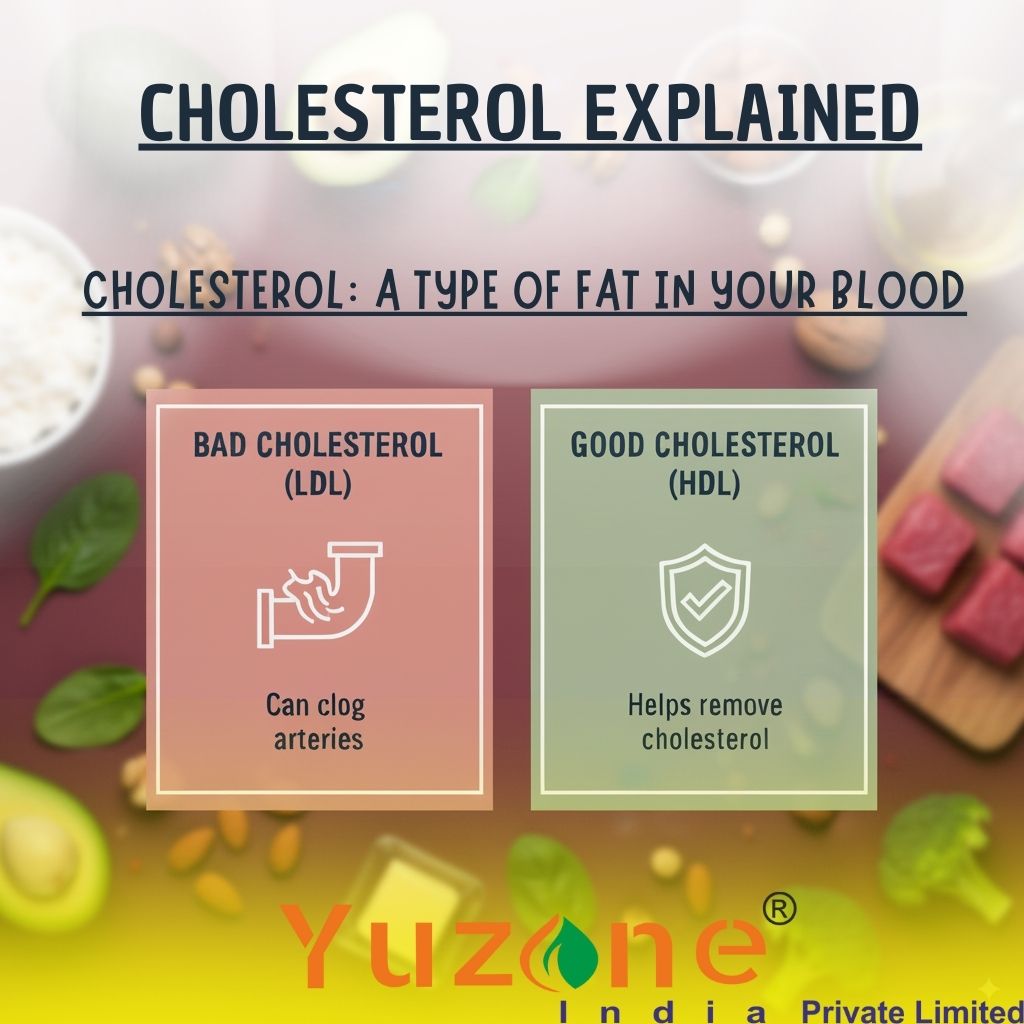
GOOD & BAD CHOLESTEROL
Cholesterol is a soft, waxy substance that’s stored in the fat (lipid) content of one’s blood stream. It’s actually important to have a certain amount of “good” cholesterol in one’s system.
Cholesterol, and our other body fats, cannot dissolve in our blood. They must be transported by special carriers called lipoproteins. The two that are most important are the high-density lipoproteins (HDL) and the low-density lipoproteins (LDL). Another kind referred to as Lp(a), which can increase one’s risk of heart attack and stroke.
High-density lipoproteins (HDL)– These are known as “good cholesterol”. Most experts agree that HDL moves the cholesterol from the arteries to the liver, where it is broken down and leaves the body through the natural evacuation process. A higher HDL level seems to reduce the risk of heart attack or stroke. Keep in mind, though, that a lower HDL level in one’s body (-40 mg/dL in men, -50 mg d/L in women) is a warning signal of greater risk of one or both. HDL removes excess cholesterol from the plaques which build up in one’s blood vessels, thereby inhibiting or slowing their growth. This is what makes it so important to the human body. Approximately 1/3 to 1/4 of the cholesterol in our bodies is carried by the HDL.
Low-density lipoproteins (LDL)– These are the major transporters of cholesterol in our blood. One can experience the buildup on the walls of the arteries which supply blood to our hearts and brains, if too much LDL enters the blood stream. When combined with other substances, it forms plaques. Plaques are hard, thick coatings that can clog one’s arteries and decrease blood flow to the heart or the brain. When this occurs in the arteries leading to the heart or brain then one is at greater risk of a heart attack or stroke.
If one’s LDL level is 160 mg/dL or higher, this is an indication of a greater risk of heart disease. And if one has already been diagnosed with heart disease, it is strongly recommended that one maintain a level of less than 100 mg/dL.
From Where Do We Get Cholesterol:-
The general consensus is that the human body is capable of producing the cholesterol that one needs to remain healthy. The body – most especially the liver – produces roughly 1,000 mg per day. Therefore the cholesterol consumed (in the form of typical foods such as whole milk dairy products, eggs, meat, poultry, fish and seafood) is not really necessary to maintain the healthy level which one needs.
Two of the biggest culprits which contribute to the excessive consumption of cholesterol are transfats and saturated fats. But other fats consumed in foods can also raise blood cholesterol. While some of the excess fat is removed from the body by the liver, most heart specialists recommend that the average person limit himself/herself to less than 300 mg daily. And if one has been diagnosed with heart disease, that level should be less than 200 mg daily. If one has been diagnosed with extremely high cholesterol, even more drastic measures may be necessary to bring it under control.
Lifestyle to control cholesterol:- Adopting to a regular exercise regimen or a moderate amount of daily activity (as like leisurely walking, gardening, light yard work, housework and slow dancing) can help to increase the intensity of breathing, heart rates which increases the movement of blood through one’s body and controls the cholesterol level.
Effects of smoking:-
Most physicians and specialists recommend that no one smoke. And it has been proven that tobacco smoking increases the risk of heart disease. One’s intake of oxygen, which is a necessary component for good vascular circulation and health, is drastically reduced. Plus, smoking is detrimental to HDL cholesterol levels and increases the possibility of blood clots, not to mention the risks of causing cancer in one’s body.
Synopsis:
- HDL is “good” cholesterol
- LDL is “bad” cholesterol
- An exercise regimen can help in lowering LDL and increasing HDL
- Cholesterol can be controlled with a sensible diet, for many people
- Smoking can increase the risks of lower HDL levels and the possibility of blood clots
Don’t try to be a physician by yourself to adopt any methods to control cholesterol. The physician can direct you for better steps you need to take in order to ensure the best results for your efforts. Don’t forget to share the family history with your physician



Comments are currently closed.